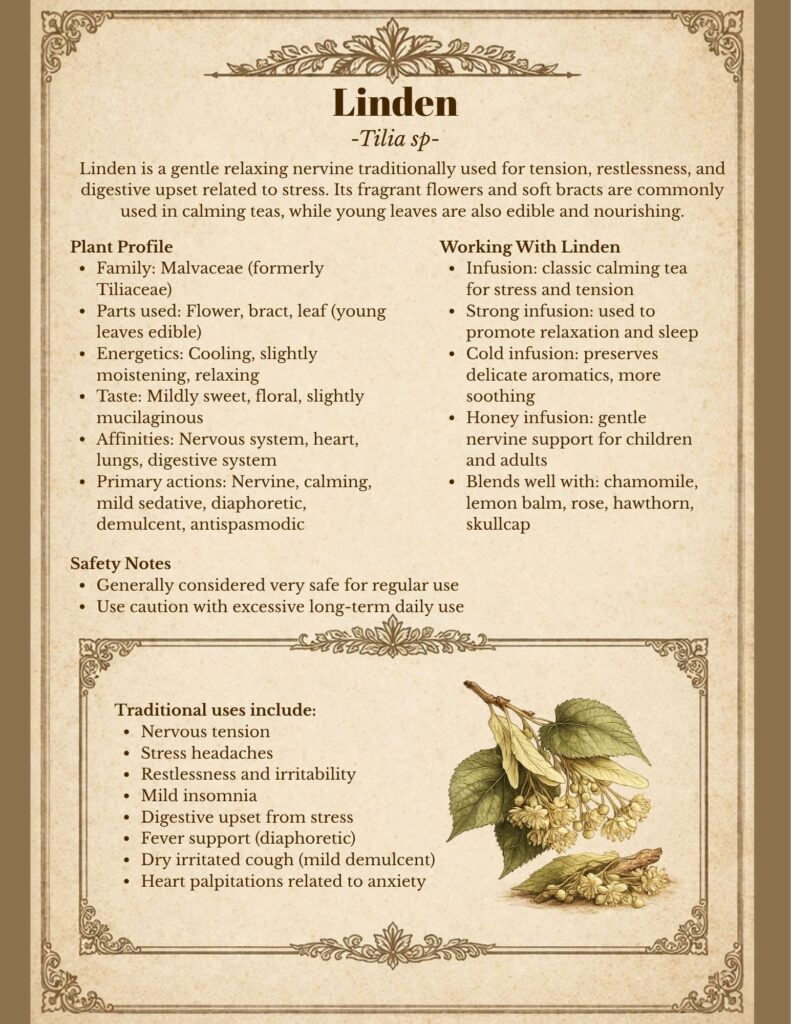
Linden {Tilia spp.}
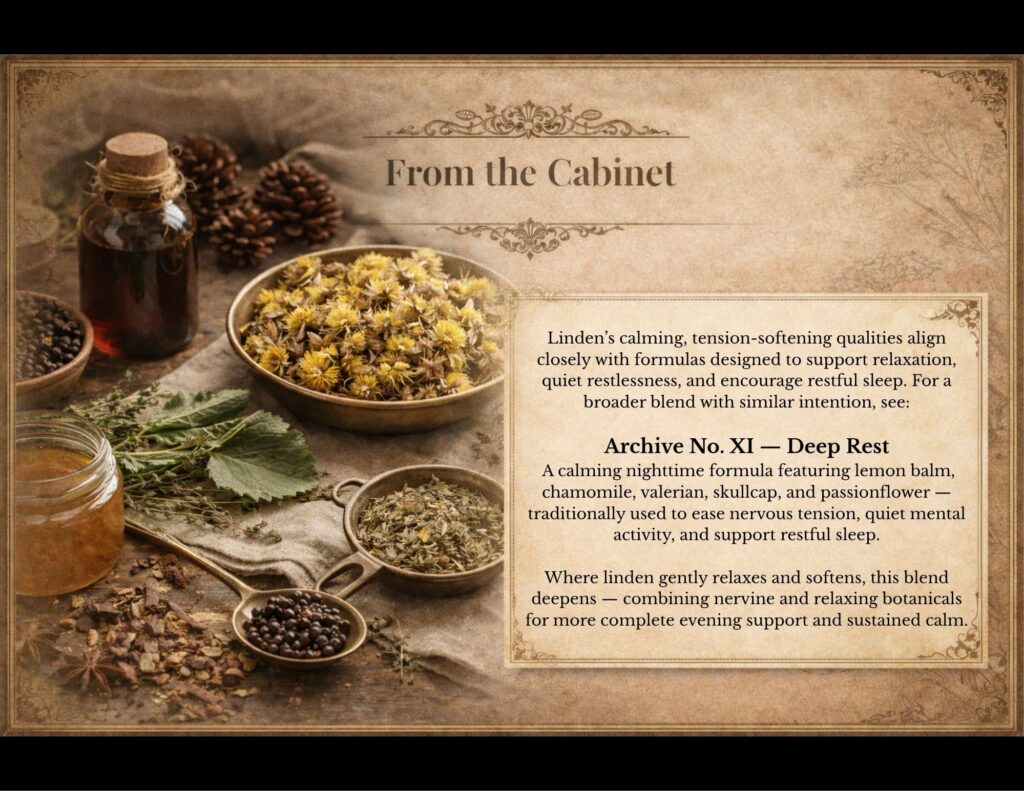
Linden is traditionally valued as a calming botanical associated with relaxation, comfort, and gentle nervous system support. The fragrant blossoms have long been prepared as warm infusions, often used when tension, restlessness, or stress-related discomfort are present.
Mildly sweet and softly aromatic, linden is commonly worked with to ease nervous tension, support restful sleep, and encourage relaxation. It is also traditionally used during seasonal discomfort, where warm preparations help promote comfort and gentle perspiration.
CABINET STUDIES
LINDEN
Tilia spp.
• Nervine Relaxant • Heart Supportive • Gentle Diaphoretic •
Working with Linden
Linden is traditionally associated with calm. Its fragrant blossoms are often used when tension is present — especially when stress settles in the chest, head, or digestion.
Its action is gentle and relaxing. Linden does not sedate heavily; instead, it softens nervous tension and encourages ease. It is often considered when restlessness, mild anxiety, or irritability accompany physical discomfort.
Its affinity is commonly associated with nervous tension, stress-related headaches, mild digestive tightness, and occasional sleep difficulty.
It does not force stillness.
It invites relaxation.
Botanical Profile
Linden comes from several species of the Tilia tree, commonly called basswood or lime tree. These tall, graceful trees produce clusters of pale yellow blossoms accompanied by distinctive wing-like bracts.
The flowers are the primary part traditionally used. They are fragrant, delicate, and slightly sweet, often gathered in early summer when fully open.
Linden trees are long-lived and expansive, reflecting the herb’s calming and supportive qualities. The blossoms dry easily and retain much of their aroma when properly stored.
Traditional Record
Linden has a long history in European herbal traditions as a calming and relaxing herb. It was commonly used for nervous tension, restlessness, and stress-related discomfort.
Warm infusions were traditionally prepared to encourage relaxation and restful sleep. Linden was also used during seasonal illness to promote gentle perspiration and support comfort.
Its traditional role centers on easing tension — both physical and emotional.
Its use reflects softening rather than suppression.
Active Constituents
Linden contains naturally occurring compounds associated with its traditional calming use:
• Flavonoids — calming and supportive activity
• Mucilage — soothing throat and tissues
• Volatile oils — aromatic relaxing qualities
• Tannins — mild astringent support
• Polyphenols — antioxidant constituents
Together, these compounds support relaxation, gentle perspiration, and overall nervous system ease.
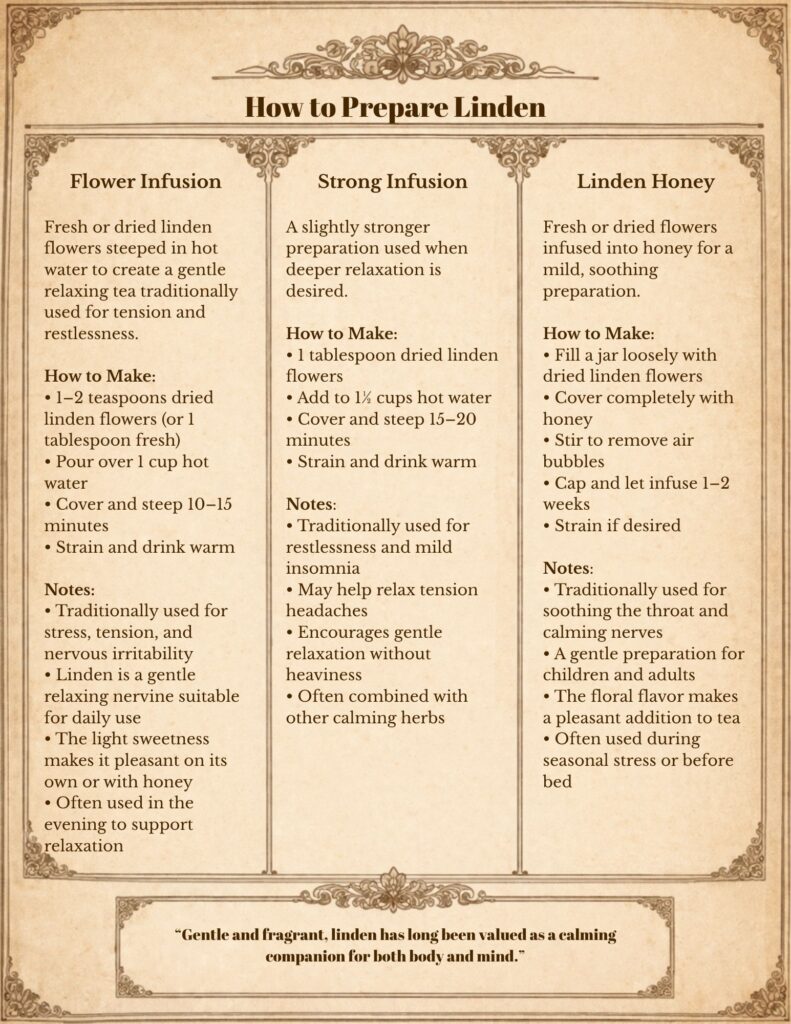
Preparation Methods
Linden may be prepared in several traditional forms:
Blossom Infusion
To Prepare: Pour hot water over dried linden blossoms, cover, and steep 10–15 minutes. Strain and drink warm.
Traditional Uses:
• Nervous tension
• Restlessness
• Mild sleep difficulty
Relaxing Evening Tea
To Prepare: Prepare a standard infusion and drink warm before rest. Often combined with other calming herbs.
Traditional Uses:
• Evening relaxation
• Stress-related tension
• Gentle sleep support
Warm Diaphoretic Tea
To Prepare: Use a stronger infusion and drink warm while resting. Traditionally taken during seasonal discomfort.
Traditional Uses:
• Seasonal chills
• Mild fever support
• Comfort during illness
Infused Honey
To Prepare: Cover dried linden blossoms with honey and allow to infuse 1–2 weeks.
Traditional Uses:
• Sore throat soothing
• Calming support
• Gentle respiratory comfort
Each preparation emphasizes linden’s role as a relaxing, soothing botanical.
Cabinet Observations
Linden softens tension.
Where stress is present, it relaxes.
Where restlessness lingers, it calms.
Where tightness builds, it eases.
Its medicine is gentle.
It does not sedate — it relaxes.
It does not dull — it softens.
It does not push — it settles.
Modern Context
Modern stress, overstimulation, and irregular rest often create nervous tension. Linden offers gentle support for these patterns.
Its calming qualities help ease mental tension while its mild sweetness makes it easy to take regularly.
Its continued relevance reflects its role as a comforting nervous system botanical.
Safety Record
Linden is traditionally regarded as a gentle herb when used in moderate amounts. Proper identification and high-quality material are recommended.
As with all herbs, individual response may vary. Use appropriately and in moderation.
Closing Reflection
Linden blossoms quietly.
Its fragrance drifts in warm air.
Its presence invites stillness.
Its medicine softens tension.
It calms what is restless.
It eases what is tight.
Where the mind is unsettled, linden brings quiet.
© 2026 The Forager’s Cabinet — All Rights Reserved
Educational and Personal Responsibility Disclaimer
All content provided by The Forager’s Cabinet is intended for educational and informational purposes only. These materials reflect traditional herbal knowledge, historical record, and personal study, and are not intended as medical advice or as a substitute for professional healthcare. The preparation and use of any herbal or natural remedy is the sole responsibility of the individual. The Forager’s Cabinet assumes no liability for any adverse effects, injury, or misuse resulting from the application of information presented. Always ensure proper plant identification, follow safe preparation practices, and consult a qualified healthcare professional when appropriate.